A Gentle Spark for POTS Relief? Here’s What the Science Shows
SE
If you or someone you love lives with POTS, you know how much it can disrupt daily life. Standing up shouldn't be exhausting, but for people with this condition, it often is. Now researchers are studying a surprisingly simple idea: could gently stimulating a nerve in your ear help calm some of the symptoms? Here's what the early research shows, explained in plain language.
First, what is POTS?
POTS stands for postural orthostatic tachycardia syndrome. It's a long word for something that shows up in a very specific way: when a person with POTS stands up, their heart races much faster than it should. Along with that racing heart, people often feel dizzy, lightheaded, shaky, foggy-headed, or completely wiped out. For some, even simple activities like showering, cooking, or walking across a room can feel overwhelming.
POTS is part of a larger group of conditions that affect the body's "automatic" controls, the systems that quietly manage things like heart rate, blood pressure, and digestion without us having to think about them. When those automatic systems get out of balance, everyday tasks can become a struggle.

The new idea being studied: Nerve stimulation
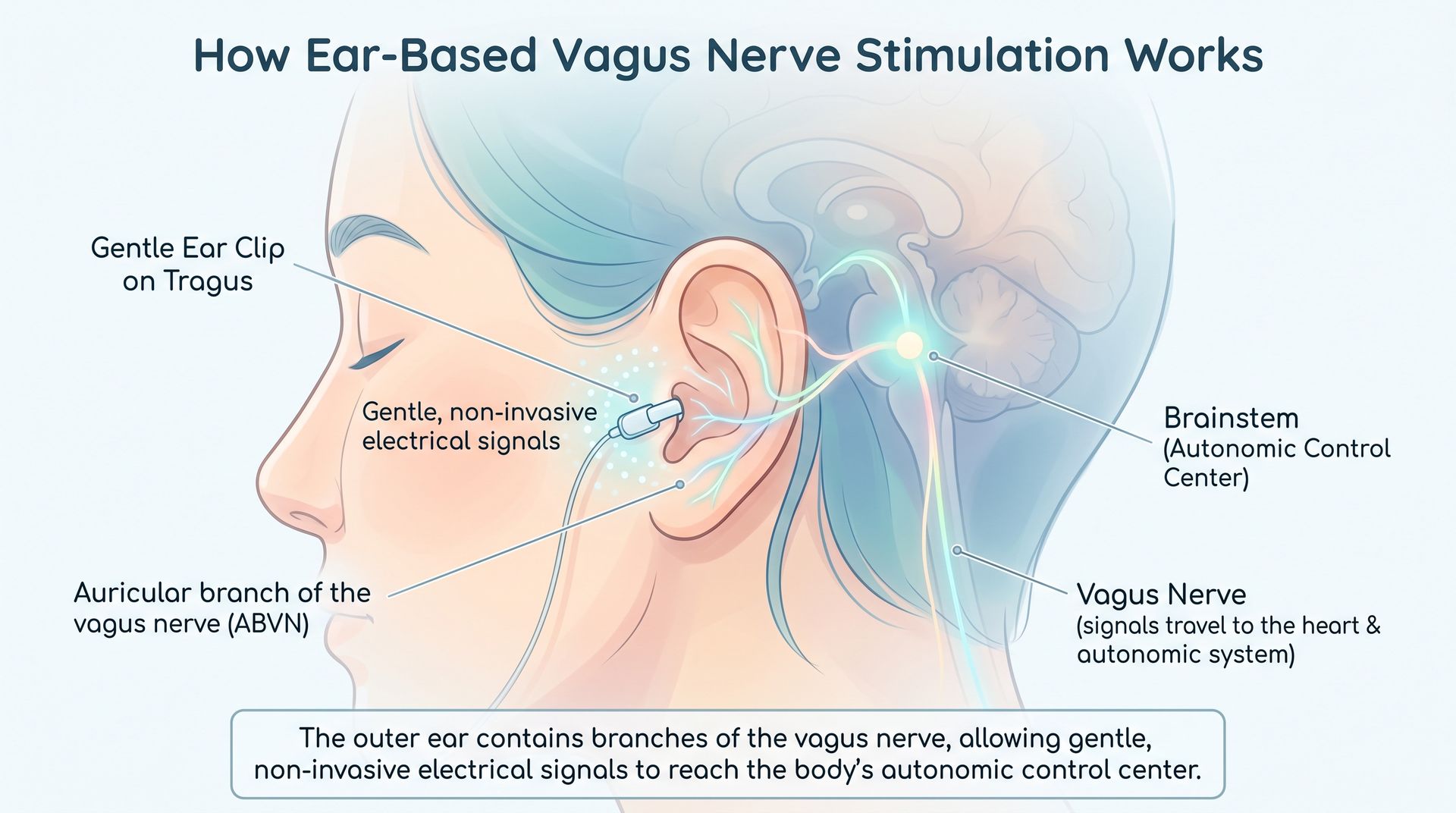
Researchers have been testing a treatment that is about as gentle as it sounds. A small clip is placed on the outer ear. Through that clip, a very mild, painless electrical signal is sent to the vagus nerve, one of the body's most important nerves, which helps control heart rate and calm the body down.
Part of this nerve runs close to the surface of the skin on the ear, which makes it possible to reach without any needles, implants, or surgery. The approach is completely non-invasive: nothing goes inside the body, and the stimulation is designed to feel like a light tingle, not pain.
What did the studies find?
So far, three small studies have looked at this treatment in people with POTS, about 105 people in total. While these were small, the early findings pointed in a hopeful direction. Across the studies, the ear stimulation appeared to:
- Calm the fast heart rate that happens when standing up
- Help rebalance the body's automatic control systems
- Lower certain markers of inflammation in the body
In the best-designed of these studies, participants used the ear clip for about 1 hour a day over 2 months.
Could the benefits last?
This is one of the more intriguing parts of the research. In one study, some people reported still feeling better up to 2 years after they stopped using the device. That raises the exciting possibility that the benefits might last well beyond the treatment period, but this needs to be confirmed in larger, longer studies before anyone can count on it.
The honest caveats
It's important to keep expectations realistic. These studies were small and early. That means the results, while encouraging, aren't yet strong enough to call this a proven treatment. There's a lot researchers still don't know, including exactly who benefits most, the best settings to use, and how long the effects truly last.
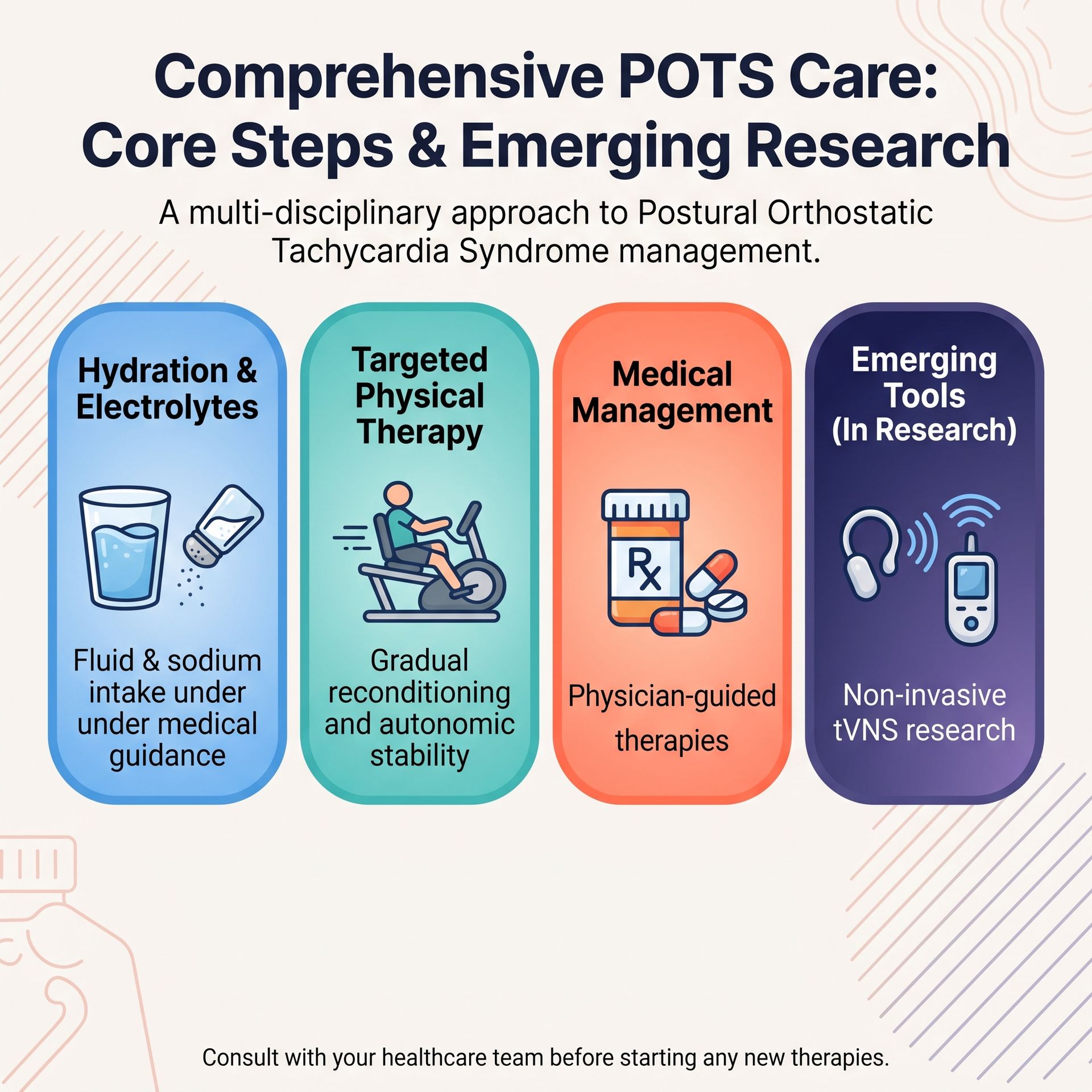
For now, ear stimulation is best thought of as a promising, low-cost, low-risk area of research, not a replacement for the treatments doctors already recommend for POTS. Those mainstays still matter and have more evidence behind them, including:
- Gradual exercise and reconditioning programs
- Drinking more fluids and increasing salt (when a doctor advises it)
- Medications prescribed for POTS
The takeaway
Nerve stimulation for POTS is an exciting field to watch. The early signs suggest it could become a gentle, affordable tool in the future, but the science isn't there yet to say it works for sure.
If you have POTS and you're curious about this kind of device, the most important step is simple: talk with your doctor first. They can help you weigh whether it makes sense for your situation and make sure it fits safely alongside the rest of your care.
This article is for general information and education. It is not medical advice. Always talk with your own healthcare provider before starting or changing any treatment.